Three Agate-Based Crystal Grids
Three agate-based crystal grids for grounding, calm communication, and reflection. Each includes the stones, layout, intention, and quartz-point directions.
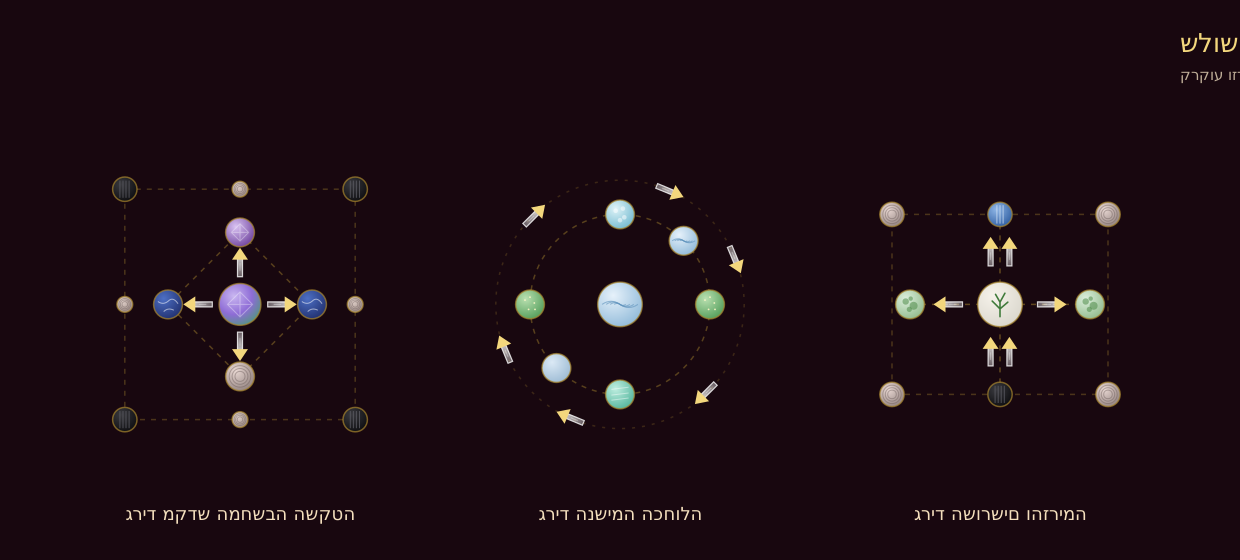
When writing about agate as a family of stones that support, stabilize, and help integrate, there comes a point when you want to see how it works alongside other stones, within a structure—not just as a single stone held in your hand.
Here are three stone arrangements built around agate. One is for grounding and energetic connection, one for emotional calm and gentle communication, and one for quieting the mind. In each, clear quartz serves as a stone of connection and direction, and the illustration for each grid uses arrows to show which way every point faces.
If you have never built a grid, you will find the basics—intention, the central stone, supporting stones, and structure—in our Introduction to Crystal Grids. For more on the agate family itself, see Agate: An Overview.
Before You Begin
One intention. Each grid has just one purpose. A grid that asks for grounding, calm, and clarity is asking for three different things from three different structures.
Quartz sets the direction. A clear quartz point is not simply another stone—it is an arrow. Its pointed tip indicates where the energy is being invited to move, so each grid explicitly specifies which way it faces. Reversing that direction changes the grid.
Agate at the center or along the frame. In the first two grids, agate is the central stone. In the third, it sits at the base and along the frame, supporting from within a structure centered on another stone. Both roles suit it.
The Roots and Flow Grid
Purpose: Grounding, energetic stability, and a connection between a steady foundation and movement and growth.
Structure: A tree, or a vertical axis.
At the center: A large tree agate. The trunk and the system as a whole.
Below the center: Black tourmaline. Root, boundary, and release.
Above the center: Blue kyanite. Direction, flow, and alignment along the axis.
On either side of the tree agate: Two moss agate stones. Growth, renewal, and flexibility.
At the four corners: Botswana agate or gray agate. Support and stability.
Between the stones: Six clear quartz points.
Quartz direction. Two points face from the tourmaline toward the tree agate. Two face from the tree agate toward the moss agate stones. Two continue from the tree agate toward the kyanite. This creates an upward movement: grounding, establishing a foundation, growth, and clarity.
Suggested intention: "I am grounded, supported by a stable foundation, and I allow energy to move through me in an orderly way."
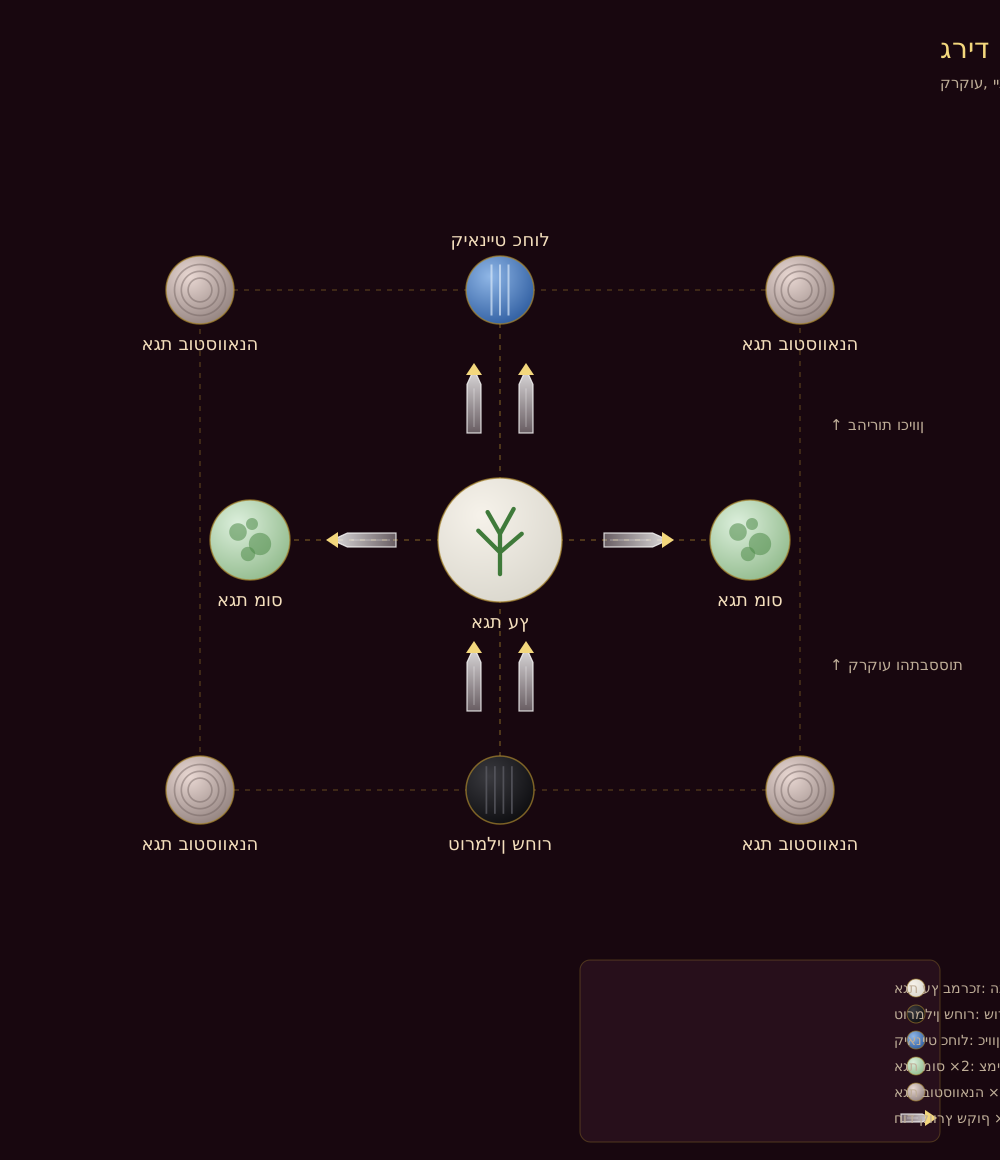
Especially suited to working with a new beginning, moving to a new home, building a business, strengthening perseverance, or feeling scattered. This is the grid tree agate was made for: it is a stone of the trunk, and here it stands exactly where a trunk belongs—between the roots and the crown.
The Blue Breath Grid
Purpose: Emotional calm, slowing down, gentle communication, and easing overwhelm before a conversation or meeting.
Structure: A gentle circle with six points.
At the center: Blue lace agate. Stillness, listening, and calm expression.
Above the center: Larimar. Softness, emotional space, and room to breathe.
Below the center: Amazonite. Inner truth, boundaries, and the ability to say what needs to be said without aggression.
To the right and left: Two green aventurine stones. Steadiness of heart, patience, and a sense of possibility.
At the two remaining points: Additional blue lace agate, or blue chalcedony.
Around the outer circle: Six clear quartz points, placed between the stones.
Quartz direction. All the points face clockwise around the circle, rather than directly toward the center. This creates a sense of continuous flow rather than a sharp concentration of energy. That is the difference between a grid that calms and one that stimulates: when the points face inward, the center fills; when they circle around it, the center rests.
Optional additions. For work focused on deeper calm, you can add four milky quartz stones outside the circle. For an important conversation, you can add blue kyanite above the larimar, creating an axis for speech.
Suggested intention: "I breathe, listen, choose my words, and allow truth to be spoken gently and clearly."
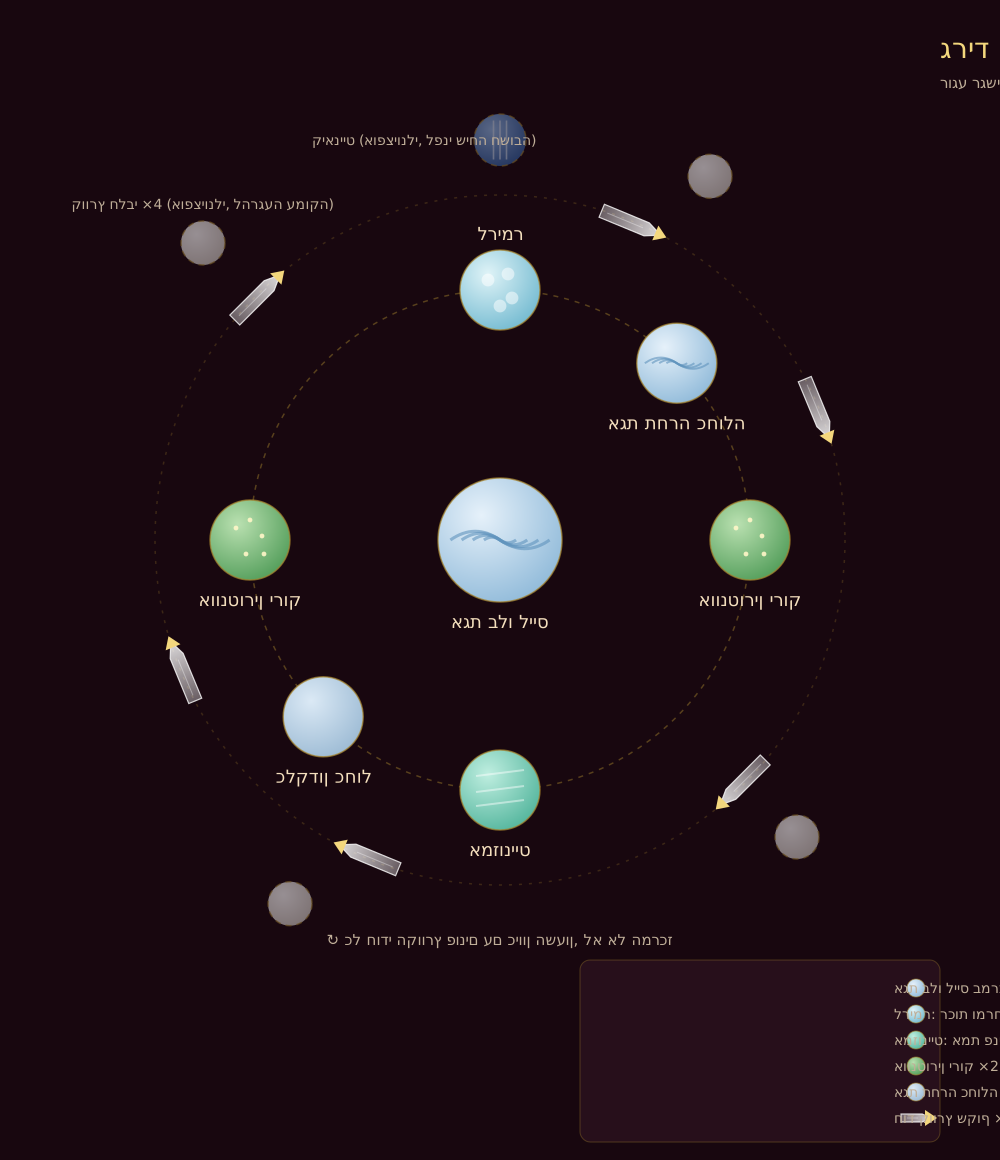
This is a good grid for a therapy room or a desk, before a conversation about boundaries, or during a time of heightened sensitivity to your surroundings. It offers what blue lace agate does in your hand, in a form you can leave on the table.
The Temple of the Quiet Mind Grid
Purpose: Reducing mental noise, organizing thoughts, and distinguishing between intuition, imagination, and worry.
Structure: A diamond within a square.
At the center: Purple or green-purple fluorite. Sorting, order, and focus.
Above the center: Amethyst. Reflection and release from repetitive thought patterns.
Below the center: Botswana agate or gray agate. Slowing down, stability, and bringing thought back into the body.
To the right and left: Two sodalite stones. Logic, articulation, and distinguishing fact from interpretation.
At the four outer corners: Black tourmaline. A boundary around the grid.
Between the fluorite and each of the four inner stones: Four clear quartz points.
Between the outer corners: Four small agate stones, one at the midpoint of each side, creating a continuous frame.
Quartz direction. All four points face outward from the fluorite. This direction is suited to easing mental overload and opening up thought that feels stuck. When the aim is instead to gather your focus before studying or writing, reverse the points so they face inward, toward the fluorite.
Optional addition. Blue kyanite at the uppermost point, above the amethyst, if you want to create a clear axis between thought, intuition, and understanding.
Suggested intention: "I allow my thoughts to fall into place. I distinguish between what I know, what I imagine, and what calls for action."
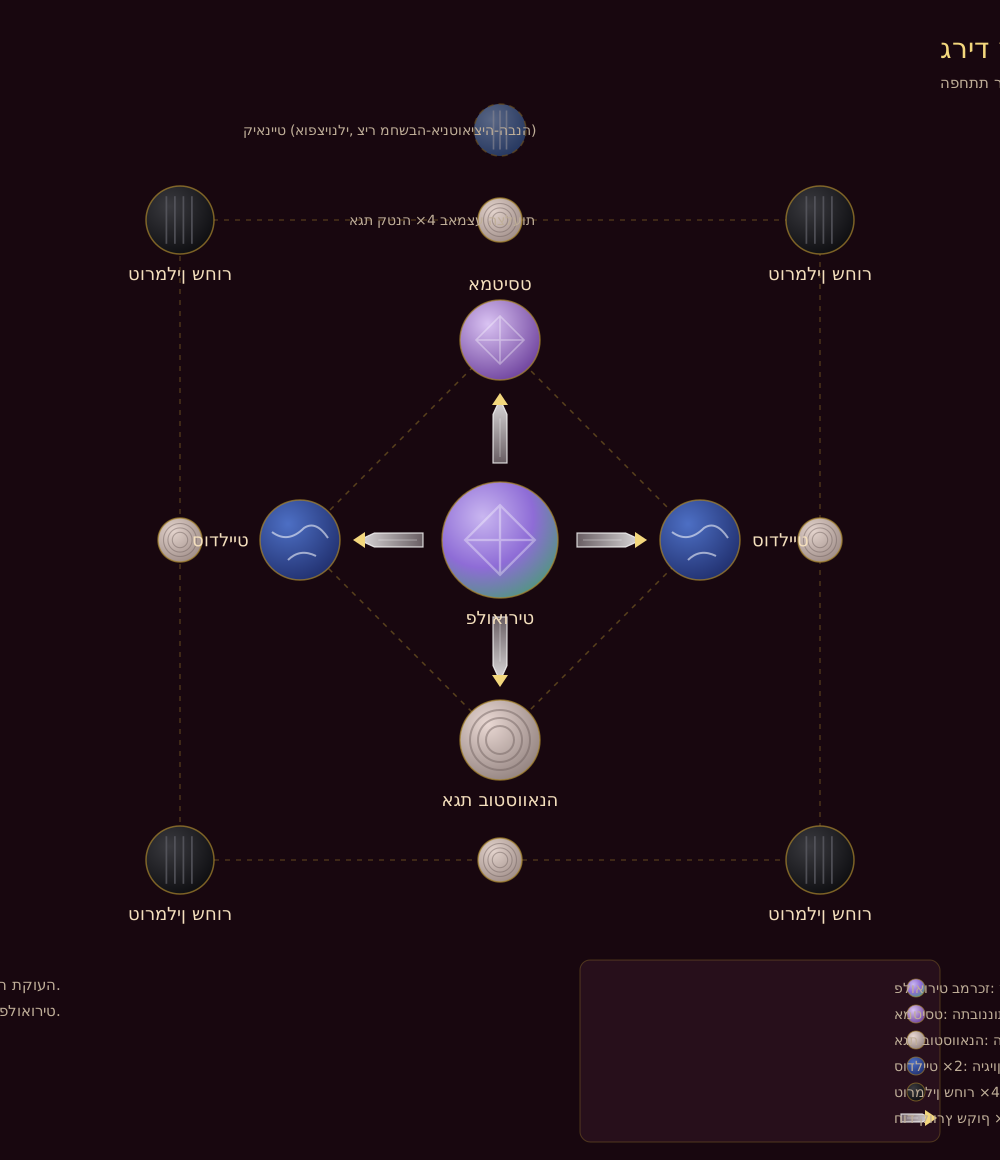
Here, agate is not at the center but at the base and along the frame—a role that suits it just as well. Fluorite sorts, amethyst reflects, sodalite articulates, and Botswana agate brings it all back to the body and the ground. Without agate, this grid would remain entirely in the mind.
Activation and Closing
Before building. Define just one purpose, and write it in a sentence.
Activation. After arranging the stones, trace a path with a quartz point from the first outer stone to the center, then from there along the entire structure. Finish by returning to the center and saying the intention once.
Duration. There is no need to leave the grid active indefinitely. You can work with it for seven days, a lunar cycle, or a period chosen in advance. A forgotten grid is a decoration, not a grid.
Dismantling. Begin with the outer stones and finish with the central stone, reversing the order in which you built it. Then cleanse the stones, as described in the article on Crystal Cleansing.
Which Grid Fits the Moment?
When the ground is shifting (a move, a beginning, feeling scattered): the Roots and Flow Grid. It builds an axis.
When your heart is full and the words will not come (before a conversation, after a demanding day, heightened sensitivity): the Blue Breath Grid. It surrounds and soothes.
When your mind is noisy (recurring worries, difficulty concentrating, confusing what you know with what you fear): the Temple of the Quiet Mind Grid. It sorts things out.
All three draw on the same quality of agate: supporting a process over time without pushing it. The only difference is what you are asking it to hold.
These grids are intended for reflection, intention, and personal ritual. They are not a substitute for medical or mental health care when it is needed.